Powered by Blogger.
Showing posts with label SPORT. Show all posts

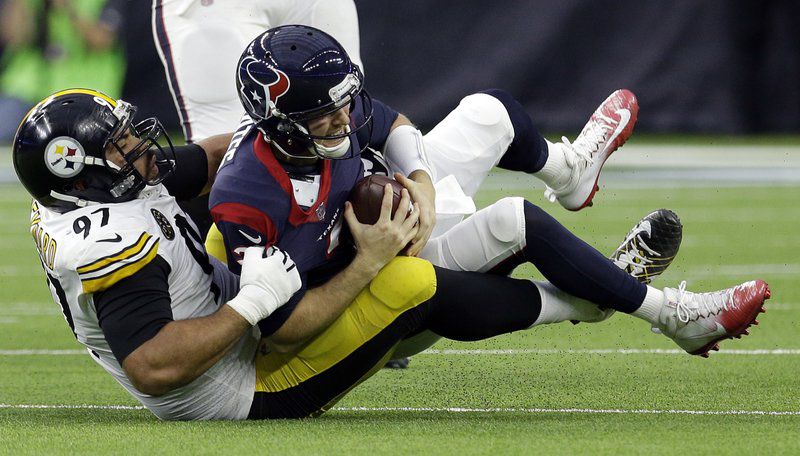
Distractions? What distractions? Steelers rise above fray
Distractions? What distractions? Steelers rise above fray

PITTSBURGH (AP) — If Cam Heyward’s being honest, he’s lost count of distractions the Pittsburgh Steelers have dealt with this season, be they self-created, overblown or otherwise.
The weeks would pass and something that had nothing to do with Pittsburgh’s relatively easy push to a second straight AFC North title and third in four years would pop up. There was running back Le’Veon Bell’s decision to skip training camp . Antonio Brown’s one-sided bout with a water cooler in Baltimore in October. Or rookie wide receiver JuJu Smith-Schuster’s stolen bike . Or Martavis Bryant’s ill-timed and ultimately ignored trade request.
Distractions? What distractions? Steelers rise above fray

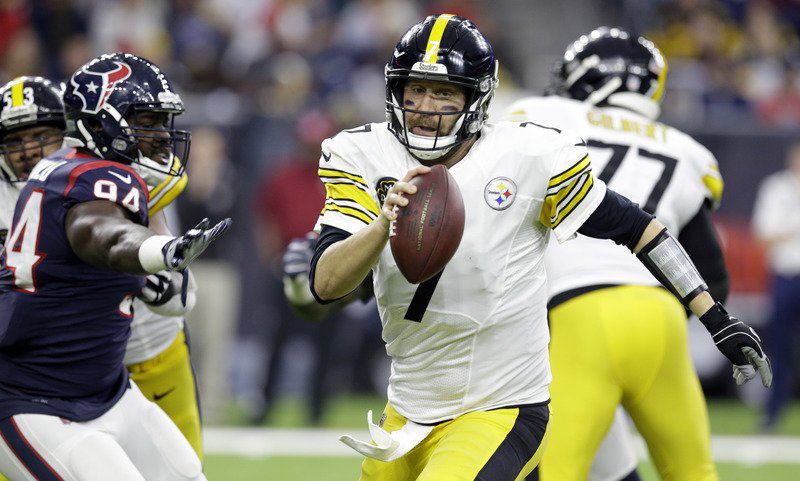
The list goes on and on. Yet at nearly every turn, the outside noise would be drowned out for three hours every week while the Steelers put together a 13-3 record, a fourth consecutive playoff appearance and a first-round postseason bye. Even a well-deserved week off didn’t pass quietly, with offensive coordinator Todd Haley limping around after getting hurt during an incident at a bar near Heinz Field shortly after Pittsburgh wrapped up the regular season with a victory over Cleveland.
Yawn.
“I think we’ve shunned it to an extent to where it doesn’t really faze us,” Heyward said. “I couldn’t even tell you all the drama that goes on. I think we’re so focused and goal-oriented when it comes to certain things, we haven’t had time to think about the little stuff. We make fun of the petty stuff. We’ll laugh at the stuff that happens.”

Maybe, but not all chaos is created equal. For a locker room that describes itself as close-knit, there was a moment of doubt. It came in the tunnel at brutally hot Soldier Field on Sept. 24. President Donald Trump’s provocative suggestion that NFL players who protest the national anthem should be fired put the Steelers in a tight spot.
Head coach Mike Tomlin told his players they could do what they wanted, so long as they were united. After failing to reach a consensus, they tried to sit it out by remaining in the tunnel as “The Star-Spangled Banner” played.
One problem: left tackle Alejandro Villanueva, a former Army Ranger, ducked onto the field to get a glimpse of the flag. The opening notes began before Villanueva could get back to the tunnel. He turned to face the flag, standing alone and unintentionally providing a stark visual symbol of an issue that in many ways defined the NFL’s season.
Linebacker Arthur Moats called the aftermath, which left some fans burning their jerseys and included Villanueva, Heyward and quarterback Ben Roethlisberger trying to explain how they “botched” the whole thing, the “lowest point you could get.”
“It was just a lot of factors that went into it,” Moats said. “It made it stressful.”
Ultimately, though, it didn’t divide the Steelers.
“That was something no one had ever experienced,” Heyward said. “That’s something that no one could have prepared for. I thought we handled it good internally after the situation. We got some stuff cleared out and understood it wasn’t the right way to approach it. But we learned. We lived through it.”
And they thrived. The Steelers fell to 2-1 after getting steamrolled in overtime by the Bears that afternoon. Pittsburgh lost just two games the rest of the way. Quarterback Ben Roethlisberger emerged from an early funk to reach his sixth Pro Bowl. Brown led the NFL in yards receiving despite missing the final 2 ½ games with a left calf injury the team hopes will be healed in time for the conference semifinals. Bell’s decision to skip camp ended up saving his legs. A year after watching most of an AFC title game loss to New England with a groin worn down by a heavy workload, Bell is fresh.


Three Reasons Why 2015 Dietary Guidelines for Americans Are Useless

Three Reasons Why 2015 Dietary Guidelines for Americans Are Useless
Every five years, the government tries to teach Americans how to eat properly and what kind of food to put in their mouths. Eat more vegetables. Do not abuse sweets. Stay away from fast food. All these recommendations are based on the best available and most up-to-date nutritional science for leading a healthy life and are familiar to us from childhood. But what do we really know about healthy nutrition for sure? Do we really believe in the absolute invincibility of the dietary recommendations?
Earlier this month, the Department of Agriculture and Health and Human Services issued the new Dietary Guidelines for Americans—a 571-page report containing the nationwide standard for national food programs. The guidelines were first issued in 1980 and are updated every five years. A group of fourteen appointed high-competent scientists and doctors have been working on the report that designed to help people make healthy dietary choices and give health-care providers, public health agencies, and educational institutions a pillar for creating their federal nutrition policy. That means that the nutrition plan your doctor recommends you or your child’s school lunch menu were likely to be developed on the basis of these recommendations.
In short, this time, the guidelines urge Americans to cut back on sugar and sodium, eat less red meat and food that contains saturated fats, and focus on vegetables. And now you can safely drink up to five cups of coffee per day without a twinge of conscience! Moreover, the doctors said that you should eat as little cholesterol as possible, so eat egg yolks (according to the doctors, they are not high in saturated fat) and wash them down with another steaming cup of Americano.
As you can see, the new Dietary Guidelines look more than controversial: along with some well-known food recommendation we used to follow, it includes a number of points that provoked a lot of healthy debates. Some public health experts express concern that the guidelines contain mixed recommendations that could be interpreted by people differently. So, while you are thinking whether the suggestions are right or wrong, we want to tell you why these guidelines (or any other ones) are useless in some sense.This Year's Advice Could Not Necessarily Be Next Year's Advice

This Year’s Advice Could Not Necessarily Be Next Year’s Advice

You must be aware of it: there is no guarantee that the next Dietary Guidelines will include the same recommendation as the current ones do. Furthermore, it seems like the guidelines are created with the help of the Price is Right wheel that turns every five years and gives a new portion of nutrition advice. For example, we used to think that cholesterol was the devil in the world of healthy nutrition, so we needed to limit our intake to 300 milligrams a day—slightly less than the amount in two eggs. But the latest guidelines dropped the previous recommendation calling dietary cholesterol a “nutrient of concern for overconsumption.” We used to think that meat is the most important source of protein and kids should eat it every day. But now we are recommended to abandon consumption of red meat or processed meat because according to recent studies, there is a strong link between this food and the number of incidents of heart diseases and cancer. Drink less coffee. Now drink more coffee. Abandon coffee. Eat meat. Be vegetarian. Drink five, or wait, six, no, eight glasses of water a day.
And the worst thing for people obsessed with healthy diet is that each recommendation is based on a study of a very competent medical institution. It is no wonder that the 2012 Food and Healthy Survey by the International Food Information Council found that for half of Americans it is much easier to deal with their taxes than to compose their healthy diet and follow food safety practices.Keep Calm and Enjoy Your Meal

Keep Calm and Enjoy Your Meal

All this noise around food you should or should not eat can cause serious stress, and last Monday’s steak for dinner can cause a sense of guilt for the entire next week. Throw it out of your head! Everyone has a list of healthy eating habits in his head which he relies on to some extent. And we are sure that there is no mentioning of the possibility that the classic English breakfast of omelet with bacon will immediately kill you. Perhaps, just in perspective.
There is a list of unbreakable rules for people having a healthy lifestyle: minimum sugar and junk food, more plant food and whole grains; no overeating and no starving; fresh water instead of Pepsi, etc. Of course, there could be some variations and deviation from the system, like vegetarianism, veganism, religious diets, and other nutrition practices, but the core idea of them all is balance. The latest Dietary Guidelines are not the Bible but simply some general recommendations that depend on global statistics data and scientific research and influence the United States food-related laws and regulations.
Instead of immediately changing your already healthy habits and following the next big diet trend, it is more important to focus on what really counts. Advertising agencies make a huge amount of money on fanatics, so do sports clubs, retailers, catering companies, and many, many others.It Reeks of Industry Interest While Displacing Public Needs

It Reeks of Industry Interest While Displacing Public Needs

The government will never tell you not to eat red meat or drink Coca-Cola, and the only reason is industry interest.
The first chapter of the guidelines actually only recommends people to eat less or more of the particular kinds of food and gives some advice, but none of these recommendations appear in the executive summary. Just the recommendation to eat less red meat was enough to anger the meat industry, especially beef producers, whose large-scale operations were accused of taking a big toll on water and land. Later, federal officials promised not to include environmental factors in their guidelines. The cattle industry does not like the government telling Americans to stop eating meat, so food manufacturers and food producers insisted the U.S. Department of Agriculture and Heath and Human Services avoid the “not to eat” wording. As a result, many experts claimed that the guidelines are based on out-of-date science and research from years past. An author of Food Politics and former chair of the Department of Nutrition at New York University Dr. Marion Nestle believes that there is a great deal of money at stake when it comes to what the guidelines say.

Best Sports Movies for Your Bucket List

Best Sports Movies for Your Bucket List
 Despite the modern tendency towards one-time movies, cinematography is still rich in films that will live forever, and this list includes a lot of movies about sport. Here are the greatest sports movies of all time that will stay popular for eternity and will always be remembered both by critics and viewers all over the world.

When We Were Kings (1996)

The 1996 Leon Gast’s documentary When We Were Kings is always mentioned in the list of best sports movies. And it is hardly surprising. All boxing fans would certainly agree that the personality of Muhammad Ali is legendary and iconic. It means a lot to see him preparing for the match, especially when we are talking about the one with George Foreman. Leon Gast shot his documentary back in 1974. However, it took him more than 20 years to get the financing to show his masterpiece to the world. And we thank the director a lot for not giving up. His great film When We Were Kingsreceived an Oscar, and the fight between two great boxers will be forever captured on film. Moreover, the director managed to portray the striking personality of Muhammad Ali by showing him all—his feelings, his thoughts, and his attitude towards the things that are not even connected with sports.When We Were Kings undercovers the true love of people and their strong faith in their hero who just cannot be defeated.

The Pride of the Yankees (1942)

Sam Wood managed to create one of the best sport films in the history of cinematography. The Pride of the Yankees tells the story of life and sports career of the first legendary baseman Henry “Lou” Gehrig. This New York Yankees’ player went down in history as the one who participated in 2130 games without having a rest for 14 years. The movie The Pride of the Yankeesmade Gehrig’s name famous all over the world and stays one of the most inspiring and sentimental stories about the baseman.

The Wrestler (2008)

What happens to a person who has nothing to lose? The world-famous Darren Aronofsky’s sport movie The Wrestler shows an aging wrestler Randy “The Ram” Robinson. He once was one the most famous wrestlers, but his life turns upside down when he has a heart attack during one of his fights. Despite the doctors’ recommendations and threats of death, Robinson decides not to give up and continues fighting anyway. The Aronofsky’s drama is intense and shows the world of wrestling as it is. The film shows all the details of this severe kind of sports and the people who literally have nothing to lose. The intense drama The Wrestler shows you what it is like to be a person whose whole life is sports.

Chariots of Fire (1981)

The list of the best sports films cannot do without the world-famous Hugh Hudson’s drama Chariots of Fire. The film was Oscar-nominated in seven categories and won four of them, including the Best Picture. The British film managed to outdistance all its strong competitors. The historical drama is a story of the rivalry between two athletes—Jewish Harold Abrahams and Christian Eric Liddell—who fought for the Olympic Gold Medal in 1924. TheChariots of Fire film shows not only the sporting competition but the rivalry between two absolutely different people that have different ideologies and religions. Hugh Hudson created a masterpiece, showing not only the world of sports but the characters of two strong athletes, their ups and downs, and the hard times for Europe when World War II is only about to come.

Rocky (1976)

It is hard to find a person who does not know the film Rocky. Among all thegreat sports movies about boxing, this one has truly become a legend. The intense, sensitive, and soulful John G. Avildsen’s drama had inspired us. So it was not a surprise when the film got its Best Picture Oscar. The Rocky film shows a broken-down boxer, who decides to use his last chance to succeed and fights for the title of the World Heavyweight Champion. Sylvester Stallone, who was then an unknown actor, managed to succeed in his role and won the hearts of the viewers and the Oscar prize, of course. While it seems that the film became popular because it was released back in 1976, the movie is adored even by the younger generation. Why? Because it has an incredible atmosphere and shows Rocky’s irresistible desire to prove that he is a person who can win Carl Weathers, the unconquerable boxer that thinks he is an undeniable winner.

Senna (2010)

Asif Kapadia’s documentary film Senna can be easily called a non-negotiable masterpiece. The film tells the story of a great motor-racing champion Ayrton Senna and his racing career in Formula One. The critics predicted the film to be a failure; however, on the very day when it was shown for the first time, they had to take their words back. The film won the hearts of the audience and was granted the status of standard documentary. The three-hours Senna film shows ten years of the champion’s life and consists of the documentary chronicle and narratives of the people who knew Ayrton Senna personally. The film perfectly shows why Senna was a special and remarkable person. Even his eternal rival, Alain Prost, said that Senna was the best person he had ever met in his entire life. Ayrton Senna was a hero, who was competing not to get an award but to prove that he can go beyond limits. The emotional documentary Senna shows a man who loved racing and never gave up.

Raging Bull (1980)

Martin Scorsese created a legend—he shot one of the greatest films about boxing, Raging Bull. The movie is about a popular professional boxer Jake LaMotta, who performed in the 40s. The film Raging Bull shows the sportsman’s fights with his competitors and undercovers his major rival—himself. Jake LaMotta’s uncontrollable and scandalous nature caused the boxer a lot of trouble in his personal life and sporting career. Raging Bullshows that the skilled professional fighter wasted his talent on constant confrontations with his managers, total consumption with jealousy to his wife, going on a binge and ruining matches. Martin Scorsese managed to show the boxer as he was and let the viewers plunge into the story using black and white filming, which conveyed the atmosphere of the documentary. The film is hard and harsh and, nevertheless, true-life. Robert De Niro, the leading actor of the Raging Bull film, created an incredible character, who is tortured by his own nature, and was a perfect fit for the role of Jake LaMotta, regardless of the sportsman’s age (the film shows 20 years of the boxer’s life). Moreover, De Niro portrayed the sportsman who is worth sympathy. Jake LaMotta watched Scorsese’s film. As a result, the film Raging Bull helped the popular sportsman understand how wasteful and careless he was with his life.

The English Institute of Sport Works on Retirement Rehabilitation Programs


The English Institute of Sport Works on Retirement Rehabilitation ProgramsThe English Institute of Sport Works on Retirement Rehabilitation Programs

What do you assume to be an athlete’s greatest challenge: going to the Olympics, winning a medal (of any kind), or winning a gold medal? These may be dreams or goals, but a lifetime challenge for each athlete is retirement. It is almost a taboo subject among professional sportsmen, yet it is inevitable. The English Institute of Sport, together with the psychologists connected to the field, gathered information about what happens to an athlete when he or she stops doing sports professionally. And here are the most important parts of the published articles.
The first problem is the craving for competition. Professional athletes start training at about 13 (in some specific sport, such as rhythmic gymnastics, the entering age can be 3-5 years old) and continue competing for 15-20 years of their lives. This makes professional athletes real adrenalin addicts. And in regular life, it is hard to achieve the same level of tension as during a tough competition when the whole world is watching you.
Secondly, professional sports has a ruining impact on both your body and mind. Given that only 3 out of 4 athletes who earned medals at the Olympics earn enough to never work after retirement, the prospects look obscure for those who never made it to the Olympics. A retired athlete has to find a job. But they are trained to do nothing but sports, have no experience and a highly traumatized body. Besides, retired athletes suffer from a rather severe depression, which also makes finding a job difficult.
And the last problem that athletes face makes it even worse. Due to the depression and the feeling of uselessness, many people unintentionally put their most valuable relations under severe strain. This means even less sympathy and comforting from significant others, which inevitably leads to a deeper depression. Hopefully, The English Institute of Sport has identified the problem of athletes’ retirement as one of the biggest global sports problems. The Institute is actively working on programs of psychological rehabilitation and social integration for retired sportsmen.